
22
Sites across Canada
How are the world’s forests responding to global changes, and what does that mean for the ecosystems that depend on them? For one MSc student at the University of Alberta, Andrea Guarino, that question has become central.
Originally from Winnipeg, Manitoba — one of the coldest cities in the world — Guarino developed an early fascination with climate change ecology through time spent outdoors observing wildlife. That curiosity eventually took her far from the Canadian prairies, all the way to South Africa, where she collected data for her undergraduate honours thesis on the effects of climate change on ectoparasites of African ground squirrels. Back in Canada, she worked as a forestry technician with the Manitoba Government, developing hands-on experience in tree disease surveying and insect monitoring. Together, these experiences formed her key goal: understanding which mechanisms drive major ecological change, and how do trees — the architects of so many ecosystems — respond to it? Understanding trees’ responses to environmental change is critical for predicting and enhancing ecosystem resilience, which in turn supports the persistence of organisms that depend on the stability of these ecosystems.
Now, as a member of the Biodiversity and Landscape Modelling Lab under the supervision of Dr. Fangliang He, and supported by the DIVERSE research network, Andrea Guarino is tackling that question at both global and local scales.
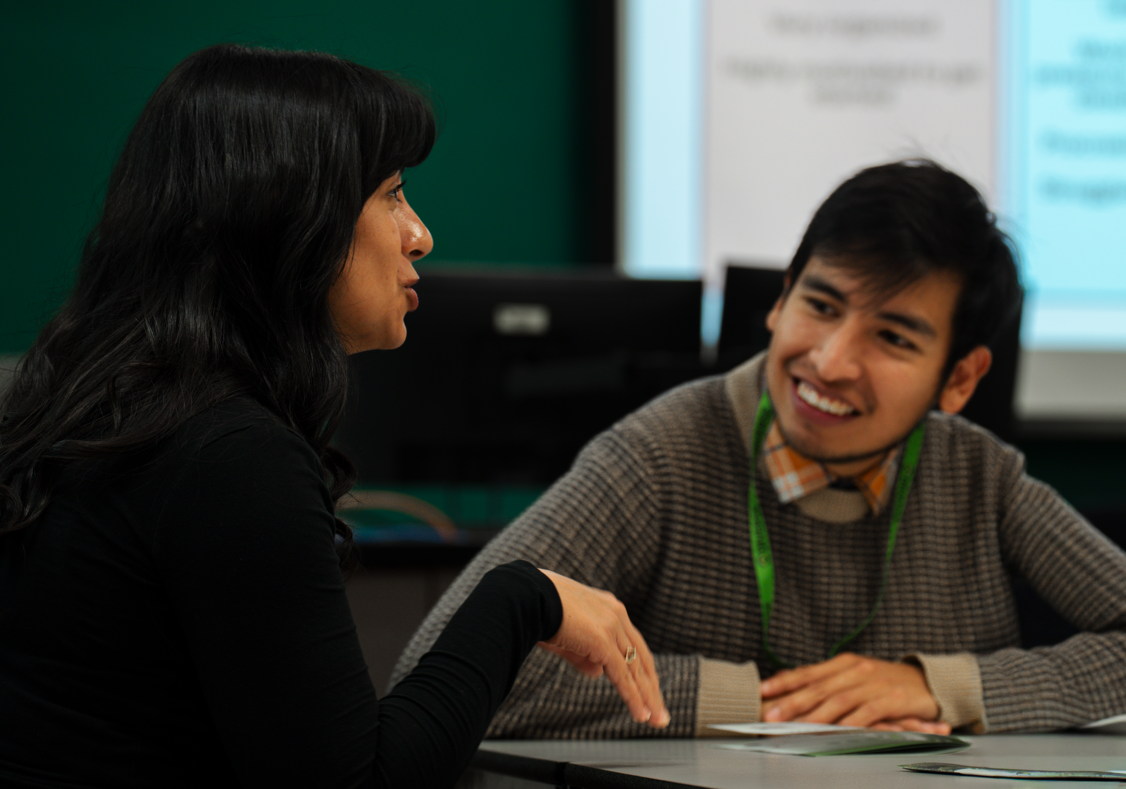
Guarino’s research moves from a sweeping global synthesis down to the resolution of a single Alberta plot — capturing both the broad patterns and the local detail:
“My research investigates changes in tree demographic rates at both global and local scales. The first chapter of my thesis is a global meta-analysis that synthesizes tree demographic data to assess their responses to global change factors. Through this work, I learned how to design and implement a rigorous, standardized protocol that facilitated the systematic screening of nearly ten thousand studies to produce a harmonized dataset for a global analysis.”
Put simply, tree demographic rates — growth, mortality, and recruitment — are key indicators of forest dynamics. Mortality risk generally decreases as trees grow larger. These rates also involve tradeoffs: species tend to balance rapid growth against survival, making demographic patterns a window into how forests adapt and persist over time.
“My second chapter will quantify the contributions of tree demographic rates and species to changes in aboveground biomass and evaluate how these relationships vary with climate over time within a 1 ha plot in Alberta. I also plan to assess the fine-scale spatial variation in tree demographic rates and aboveground biomass using subplot-level analyses within the plot.”
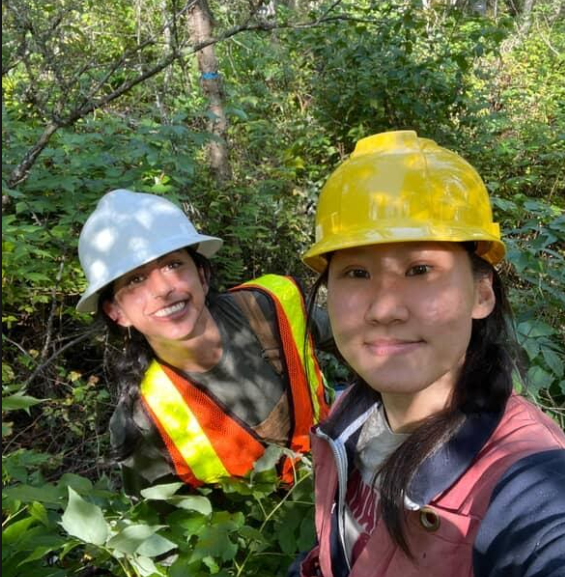
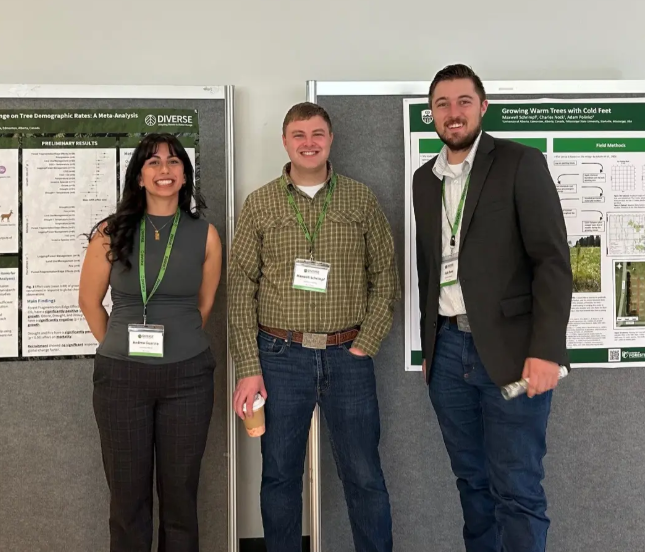
For Guarino, the broader exposure has been an unexpected — and welcome — dimension of the DIVERSE experience:
“The most surprising aspect throughout my time as an HQP has been the sheer breadth of professional opportunities available beyond my own research. I have particularly valued the chance to build a professional network with fellow researchers, gain exposure to various disciplines within forestry, and witness firsthand the innovative research trials being conducted across the country.”
Looking ahead
“Post-graduation, I aim to apply my ecological skills outside academia to inform conservation and management initiatives, particularly in the context of climate change. Although I remain open to future academic pursuits, my current goal is to use the methodological and collaborative skills I developed through DIVERSE to support applied decision-making.”
As climate pressures on forests intensify, researchers who can connect data to decision making are increasingly essential.
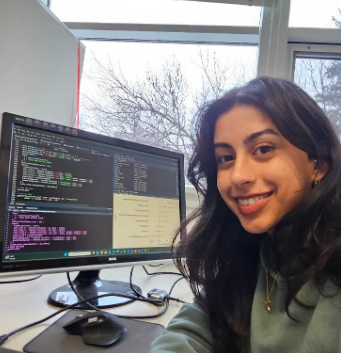
“DIVERSE has prepared me for the demands of this work, and I am eager to see both my own career trajectory and DIVERSE’s collective research unfold!”