
22
Sites across Canada
A key component of the DIVERSE project is taking the results and findings from our vulnerability assessments, species selection tools, and LANDIS models, and applying them to on-the-ground research. Our Silvicultural Trials, as part of DIVERSE’s theme 6, are the culmination of these methods and goals, where science meets the ground. We hope for these trials to be the legacy of DIVERSE, fostering learning, research, and collaboration in Canadian forests for years to come.
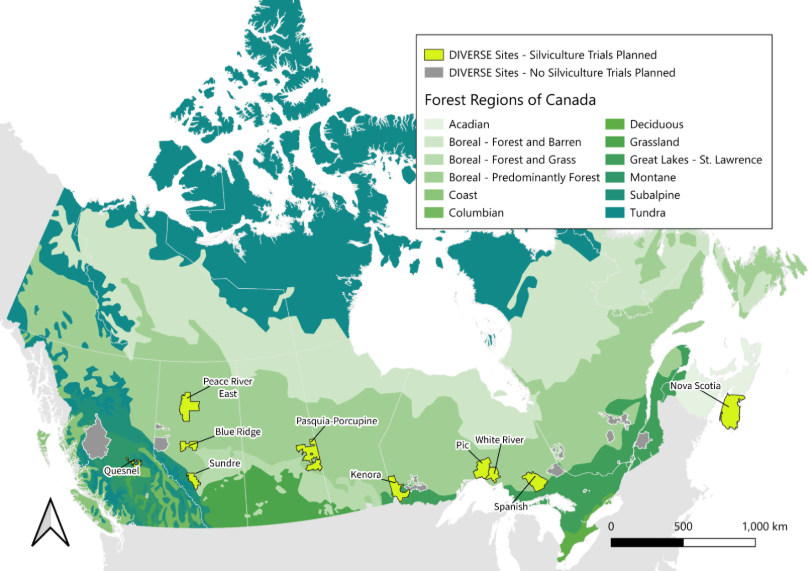
Currently, we have Silviculture Trial installations planned across Alberta, Saskatchewan, Ontario, and Nova Scotia. Each research installation will function both as a standalone research project, and as a part of the greater silvicultural trial network. Some sites are still in their planning phase – choosing species and provenances for planting, sourcing seed, and selecting installation site locations. Others, like our White River installation, will be planting as soon as this summer.Not only do these installations span across provinces, but also across different ecoregions. Most of our sites are found within the boreal forest ecoregion, but some span into other regions such as the Acadian and Great Lakes-St. Lawrence Forests (see below).
White River Installation Paves the Way
While some of our installations won’t be harvesting or planting just yet the White River site, lead by Stephen Mayor from the Ministry of Natural Resources in Ontario, is on track to start planting this summer 2026. This site will lead the way for multiple other sites that will be planted into 2027 and 2028.
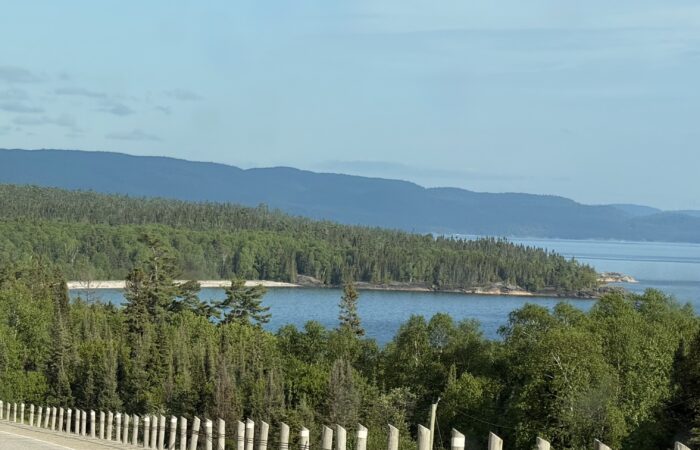
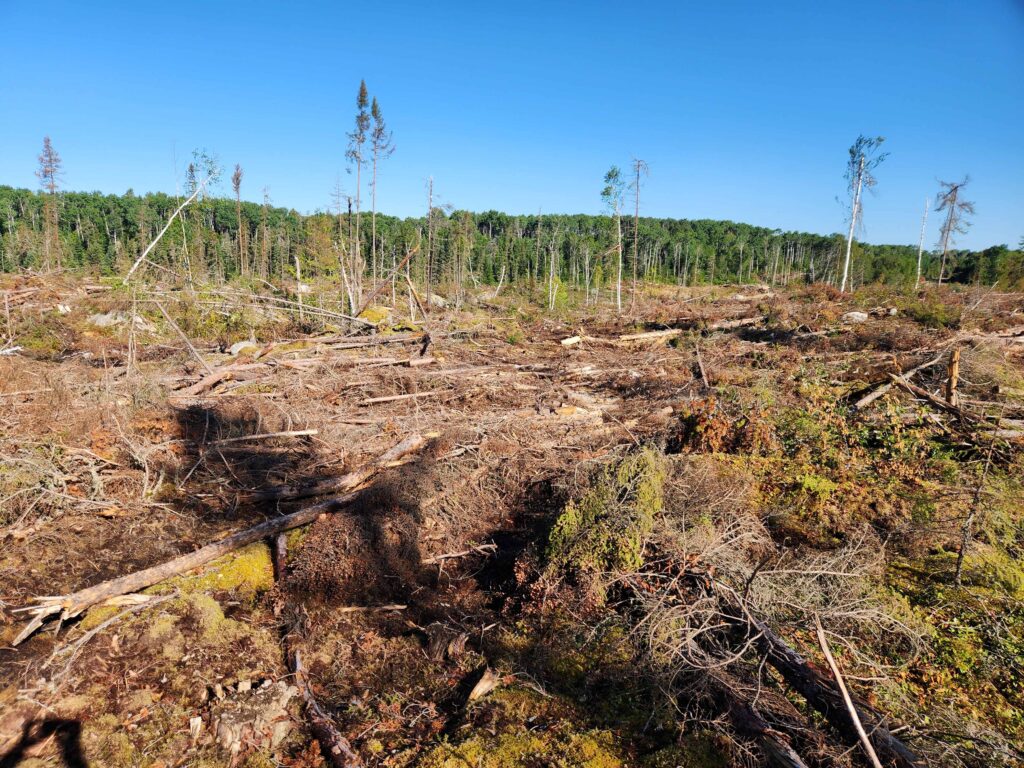
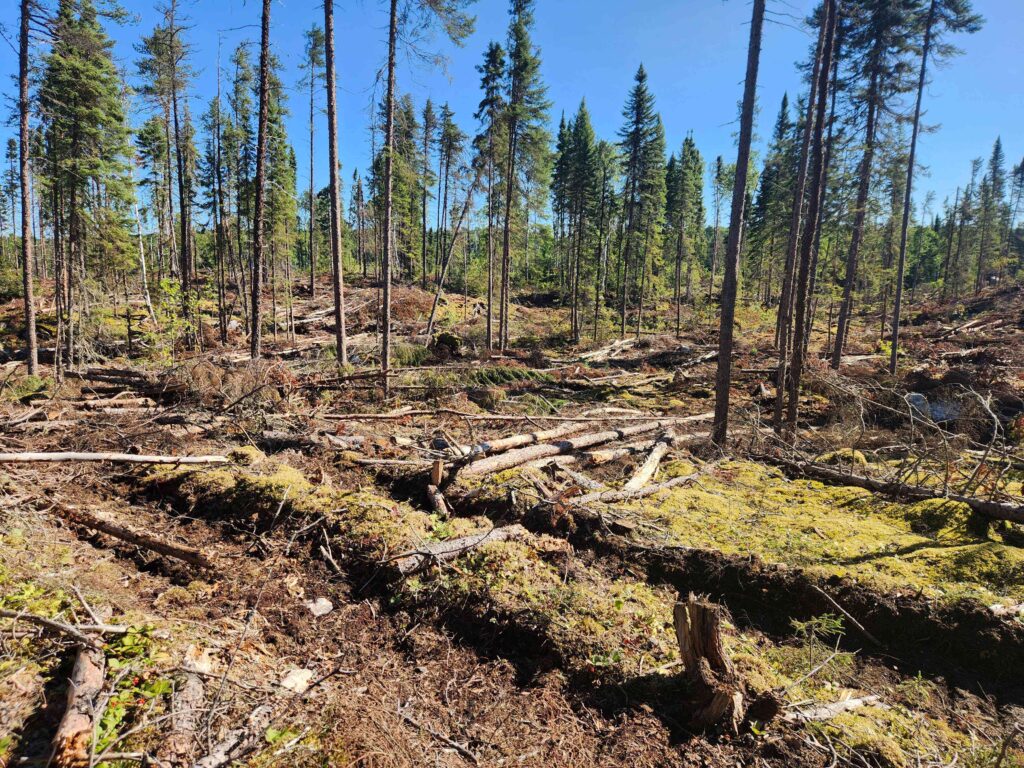
The White River Forest is located in the southern boreal forest, in the Ontario Shield, just inland from Lake Superior adjacent to Pukaskwa National Park. The pre-harvest stand was mixed conifer, predominantly Black Spruce (50%) and Jack Pine (40%), with Trembling Aspen making up the remainder. The White River site was harvested last summer, and the seeds for revegetation sown last winter. The goal is to have these seedlings in the ground this June.
White River installation site lead Stephen Mayor shares with us his take on why he thinks these trials are so important:
With climate change, uncertainty reigns. Because it’s not clear how forests will adapt to a warmer climate, and how we might be able to give them a helping hand, this science is critical. These experimental plantings not only allow us to test the potential for a wide variety of species to establish in the boreal forest, but for biodiversity to improve the regeneration and productivity of the forest. The relative success of these treatments will provide valuable information that can be used to guide management of the forest to maximize its resistance and resilience to climate-related stresses and disturbances.
How an Installation Gets Established: From Landscape to Plot
Each of our installations, including White River, is led by a site lead and science lead (in many cases, these are the same person), and they are responsible for implementing their installation according to research trial design produced by the DIVERSE Theme 6 Science Team. In White River’s case, Stephen Mayor wears both of these hats.
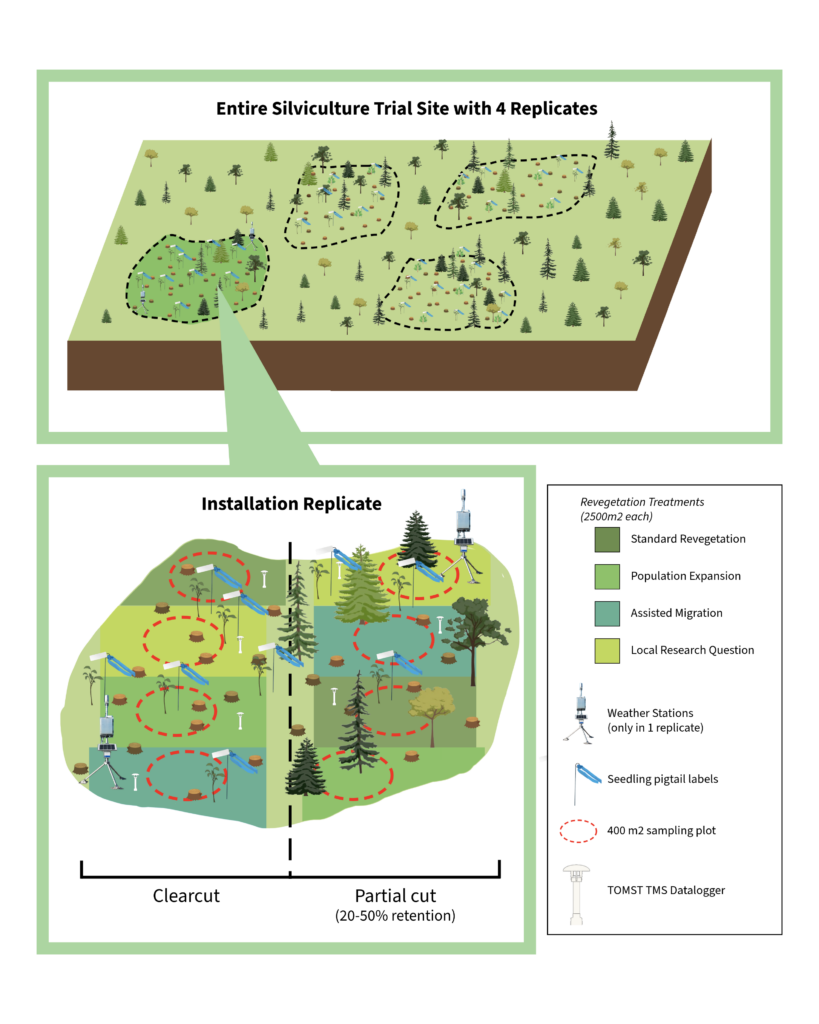
According to our design, each installation must have 3–4 complete replicate blocks (roughly 20–40 hectares each) — meaning the full set of treatments is repeated in 3 or 4 distinct locations across the installation’s landscape. Replicates are important because they provide a buffer against losses — if one block is affected by drought, pest pressure, or extreme weather, the others remain intact. Each replicate block must also be accessible by road, so that students, scientists, government officials, and community stakeholders can visit and witness the research firsthand.
As a site lead, Stephen Mayor has been responsible for leading and establishing a steering committee for the White River installation. Installation steering committees bring together multiple stakeholders and members of the surrounding community, including scientists, Indigenous representatives, and industry members. Each steering committee guides the local decisions for their installation, including site selection, choosing species for planting, seed sourcing, and setting timelines. These decisions become quite important for establishing the two treatment categories within each site, which are as follows:
The Split-Plot Design: What It Is and Why We’re Using It
This treatment design, in which finer-scale treatments are nested within larger-scale ones, is called a split-plot design.
In forestry, some treatments must be applied at the scale of a whole stand. Harvest, for instance — whether to clearcut or retain a portion of the canopy — can’t be varied within a small area. This makes harvest our “whole-plot” factor in the DIVERSE trials: each replicate block is divided in two, with one half receiving a clearcut and the other a partial retention cut of 20–50%.
Nested within each harvest treatment are our four revegetation treatments — the “split plots.” Because revegetation happens at a finer scale, we can vary what gets planted in each section, and ask which species combinations, provenances, and assemblages perform best under the harvest conditions above them. Crucially, this design also lets us examine how harvest and revegetation treatments interact: a species that thrives under a clearcut might struggle beneath a partial retention canopy, or vice versa. Studying them separately would never reveal that.
This design does come with real complexity — blocks must be carefully laid out, treatments consistently applied across multiple provinces, and the statistical analysis must account for both scales simultaneously. The figures below illustrate how it all translates from the landscape level down to the individual tree.
The Treatments: From Revegetation to Local Research Questions
When designing this project, it was essential not only to collaborate with our industry partners and stakeholders, but to give them genuine agency in the design of the research. To this end, each trial site is led by a local industry partner and includes a fourth treatment category – a local research question – that is unique to the interests and needs of that area.
As mentioned previously, the revegetation treatments – the finer scale of treatments within the split plot design – consist of 4 categories. These treatments are:
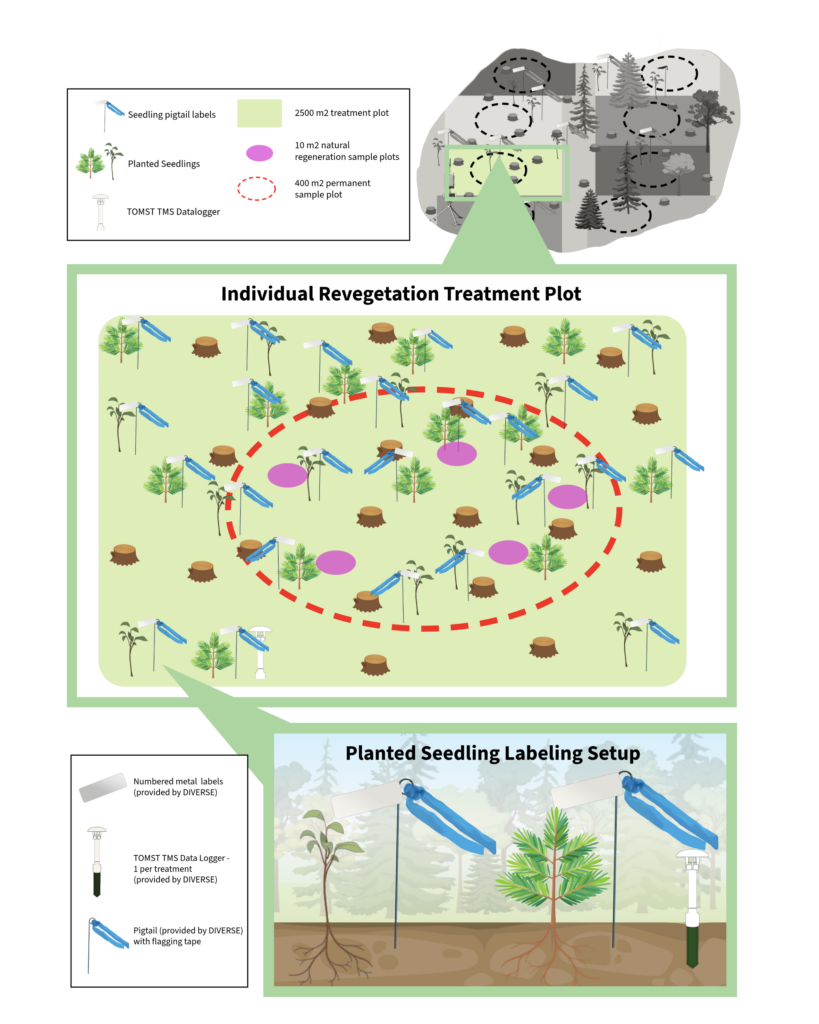
For the White River installation planting this summer, their business-as-usual treatment will start by planting local seed of jack pine, black spruce, and white spruce. Their assisted population migration treatment will plant the same species, but with provenances from southern Ontario, which are expected to be better adapted to the anticipated future climate. For their assisted range expansion treatment, they’ll be planting white pine, red pine, eastern hemlock, sugar maple, and yellow birch. These species are all native to Ontario and hold commercial potential, but their natural ranges don’t currently reach the White River area — that could change as the climate warms.
For their local research question, the White River team will investigate the role of tree biodiversity in improving regeneration and productivity. To do so, they’ll plant an assemblage of ten species with varying adaptations to the warmer, drier conditions projected under climate change. These include jack, white, and red pines, white spruce, hemlock, sugar maple, white and yellow birch, and perhaps optimistically, red oak and basswood
It’s very exciting to see the White River site exploring planting so many different species that are novel to the area. We have been encouraging each site to think outside the box and go bold with their species selections – that’s what research is about! To support these decisions, DIVERSE has provided site leads with a species selection tool to help inform their choices.
Planting a Legacy
The White River installation is the first of what we hope will be many DIVERSE Silviculture Trial sites, each carrying forward the legacy of this project across Canada’s different forest landscapes. As more sites are installed across provinces and forest regions, they will build a picture of how Canadian forests can be guided through global change.
These trials won’t yield results immediately – trees take time to grow – but they will be sites where students, researchers, government officials, stakeholders and the public can engage with the unfolding story of assisted migration in real time.