
22
Sites across Canada
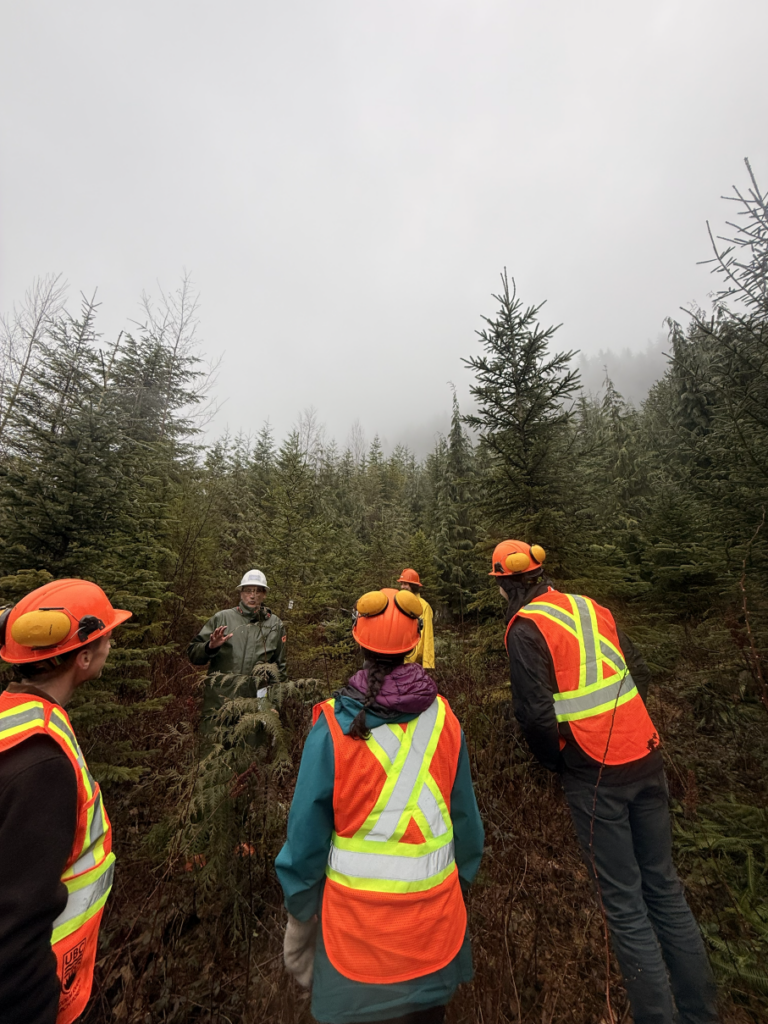
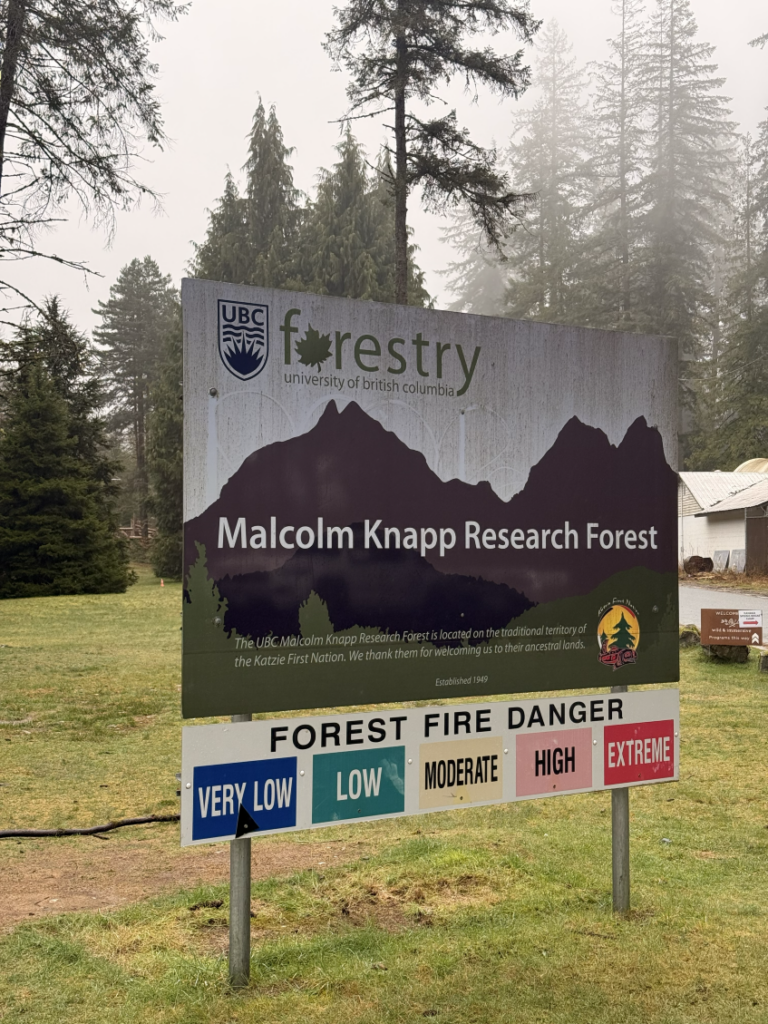
As the quintessential rain of the BC Coast fell around us, our research group took in a surprising sight – two Ponderosa pines standing proud amongst the lush, wet greenery of the Malcolm Knapp Research Forest (MKRF). Not only were these pines a surprise, but our group also noted the stark contrast in size and height between trees of different species that had been planted the same year. These trees were a part of an installation of the Assisted Migration Adaptation Trial (AMAT), a large, long-term climate change experiment that spans across British Columbia and the Pacific Northwest.
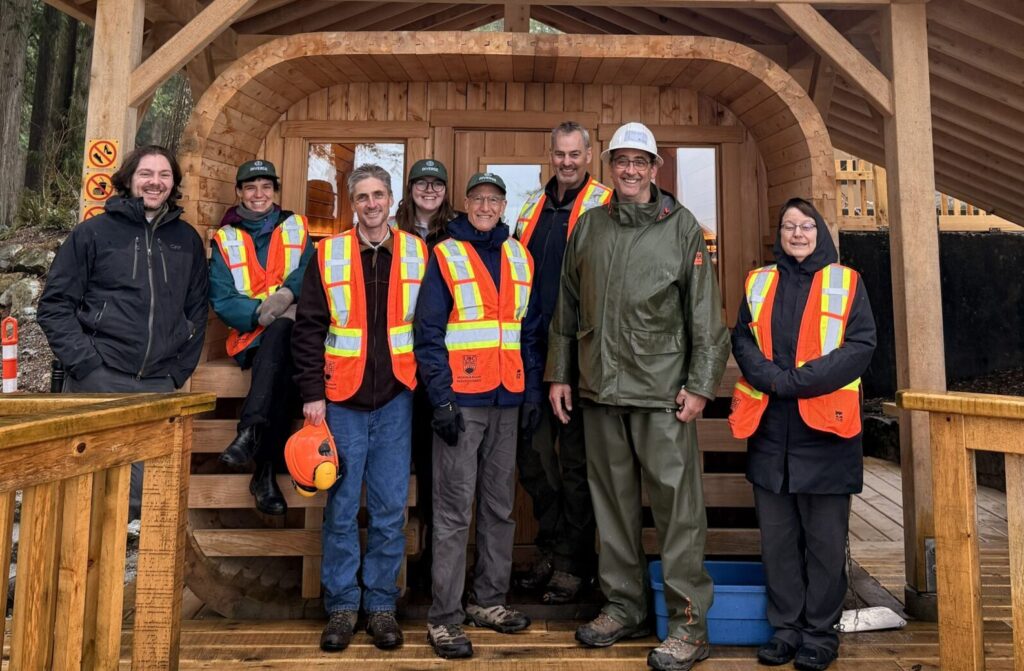
This past April, several members of the DIVERSE team spent the day with MKRF’s Ionut Aron and Anna Tobiasz. At Malcolm Knapp Research Forest, research is built around long-term, field-based experiments that track how coastal temperate forests respond to different management strategies and environmental pressures. Scientists from the University of British Columbia and partner institutions use the forest as a “living laboratory,” where permanent plots and instrumented watersheds allow them to monitor forest changes over decades rather than short study cycles.
As we experience changes in our climate, social demands of forests, and pests, we face a practical problem: trees planted today will mature in a much warmer climate and a markedly different world. The AMAT trials that we visited aimed to find answers to this problem. In these sites, seeds from 15 tree species (e.g., Douglas-fir, western redcedar, Sitka spruce) were collected from different climates across western North America and planted at 48 test sites in the Pacific Northwest. Researchers track tree responses over decades with the goal to link seed origin (genetics) with site climate to figure out what combinations perform best under warming conditions.
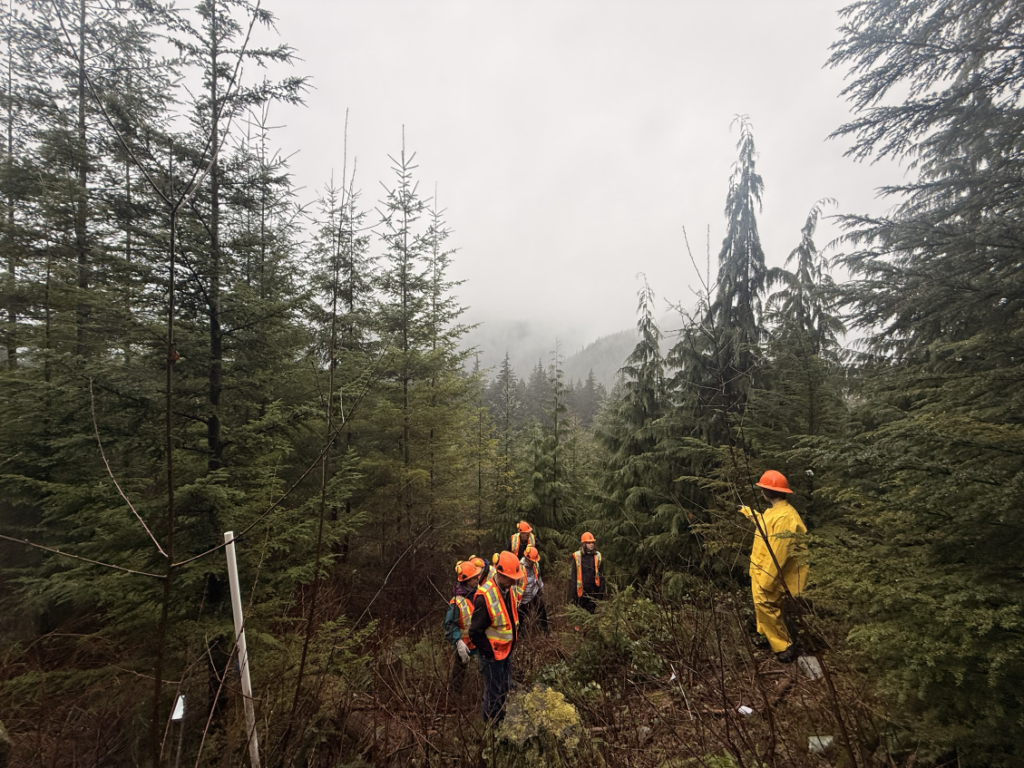
Through DIVERSE’s Theme 6 Silviculture Trials, we hope to have multiple such installations as the AMAT site. As we walked through the MKRF installation, we were given a glimpse into what our installations may look like in a couple of decades. It was remarkable to see some trees struggling to grow, next to the same age trees towering above us.
“This (AMAT) project has the potential to directly inform seed transfer guidelines and policies”, Ionut Aron tells us. This will be essential if we are to maintain our forests in the uncertain conditions of the future.
A major focus of MKRF’s AMAT installation is sustainable forest management—testing harvesting methods, regeneration techniques, and species mixes to balance timber production with ecosystem resilience. Researchers there also study hydrology, climate change impacts, and forest health issues like pests and disease. Because experiments are integrated with operational forestry, findings can be directly translated into real-world practices used across British Columbia’s forest sector.
The DIVERSE project is not only investigating assisted migration through our Silviculture Trials; we are also investigating different harvest methods. This way, we will be able to see how harvest management and assisted migration interact. At our second stop—the ‘Not-So-Clearcut’ sites — we saw this kind of harvest research in action.
These Not-So-Clearcut Trials are large-scale operational experiments in alternative logging systems (led by Suzanne Simard and Dominik Roeser). Canadian forestry has historically been dominated by clearcutting, while parts of Europe rely much more on continuous cover forestry. The trials were set up in pure Douglas-fir plantations originating in the 1960s and 70s. They were looking at alternatives to clearcutting as well as comparing traditional whole-tree harvesting systems to the European-style cut-to-length system (CTL) that uses smaller machines and reduces soil disturbance during the operations. CTL systems are not something we are testing through DIVERSE, but it was valuable to witness other methods of research in harvest management.
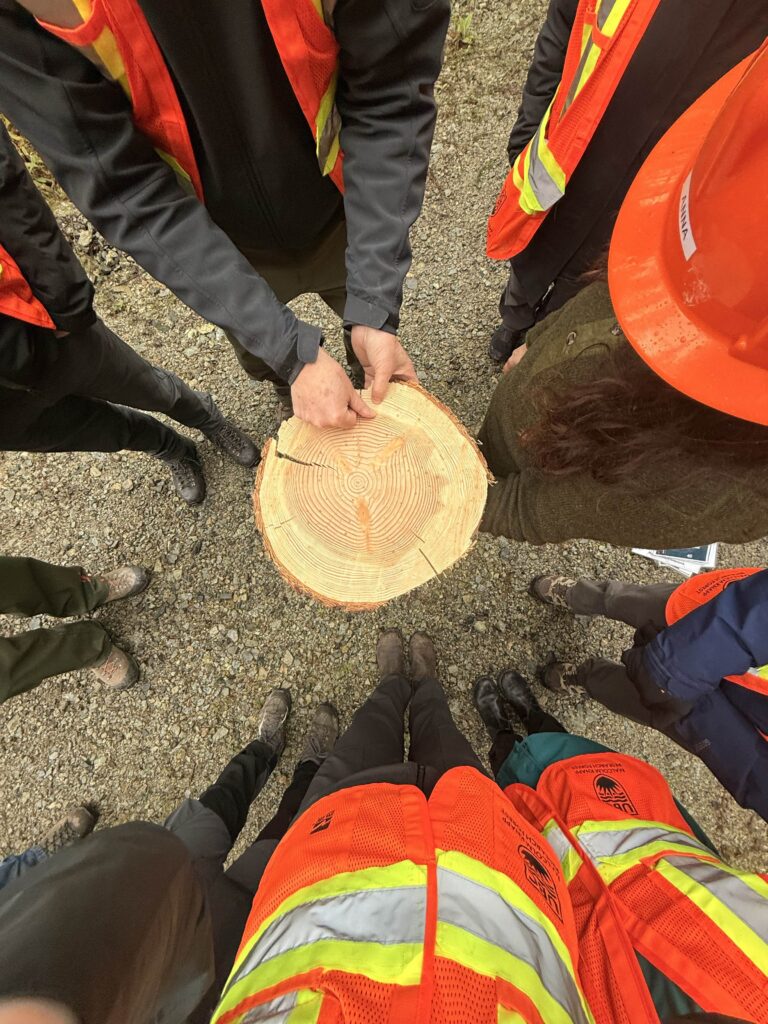
The visit to the MKRF allowed our team to imagine what our own research installations will eventually look like and get excited for the future. This is why we do field tours – not only so we can learn about other research projects and results, but so we can learn from these other groups and get inspired for our own work. Our group greatly enjoyed our time in the MKRF – a big thank you to Ionut and Anna for hosting us!