
22
Sites across Canada
Most of the time, PhD students Shelley Wang (Department of Ecology and Evolutionary Biology, University of Toronto) and Zijing Luo (Department of Renewable Resources, University of Alberta) study forests through a computer screen. They build simulations to understand better how forests could be managed in the face of global changes. Early June 2026, they stepped away from their desks to go visit the boreal forests in the Peace River region of Alberta, where foresters from Mercer Peace River Pulp Ltd. took them on a guided tour.
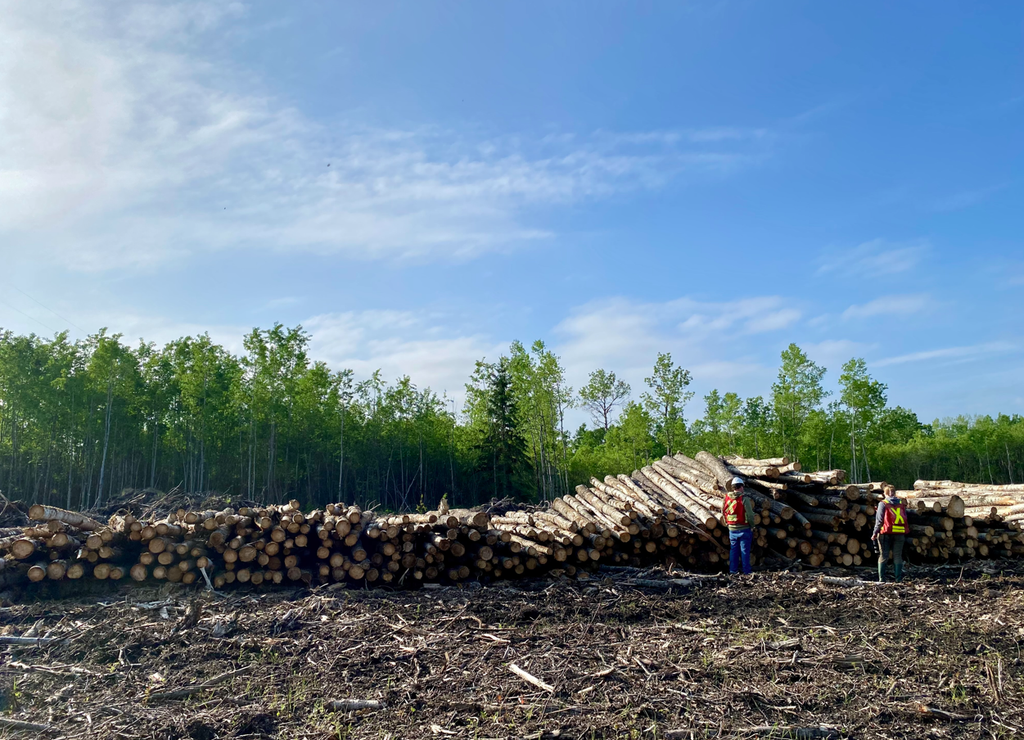
Both students are part of DIVERSE, a Canadian research initiative exploring how forests and forestry practices can adapt to global changes, and Mercer is one of the project’s key industrial partners. Dr. Charles Nock, who is a researcher in DIVERSE and an Associate Professor in the Department of Renewable Resources at the University of Alberta, organized this visit as a chance for the researchers and the people who manage the land to learn from each other.
Shelley and Zijing both use LANDIS-II, a computer model that simulates how a forest landscape changes over decades. In the model, they can set up different scenarios of climate change, fire events, and forestry activities such as harvesting and planting. However, the results will only be useful to practitioners if those rules reflect reality. “Finetuning and designing the harvest and silviculture rules in LANDIS-II are at the core of my research project,” says Shelley. The trip had two goals: to learn how Mercer and other companies currently manage the Peace River East area, and to understand what Mercer hopes to gain from working with DIVERSE, including its concerns about the forest’s future and the questions it wants researchers to answer.
Zijing explains that seeing managed forests in person was helpful to understand forest practices firsthand, as a foundation for simulating novel management approaches. “Credible simulations should be based on how forests are actually managed,” she says.
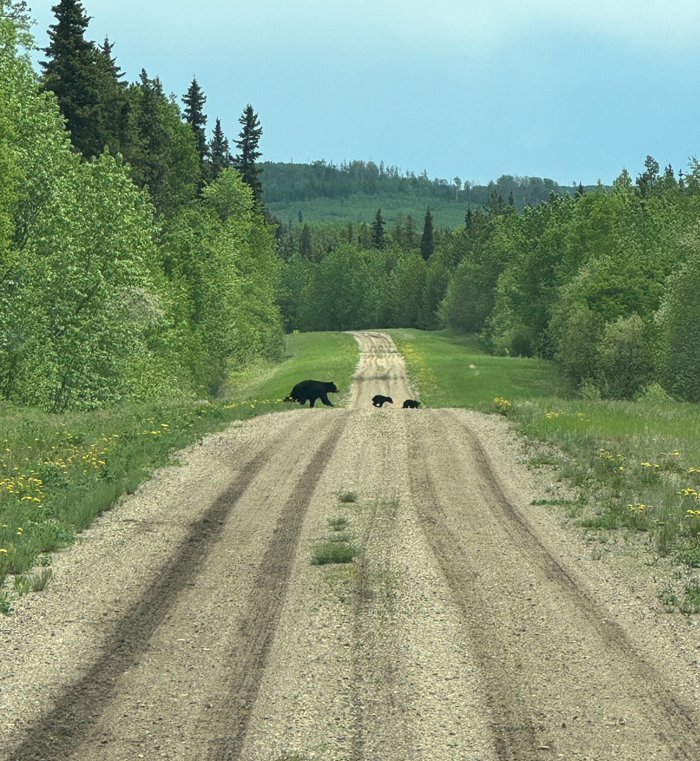
Peace River East is a Forest Management Area (FMA), a large stretch of public forest that companies manage under a long-term agreement. Three Mercer team members hosted the group’s visit: Kevin Kemball (Management Forester), Aaron DesLauriers (Operations Supervisor) and Arianna Loogman (Woodlands Scaling Coordinator). They spoke about daily operations, how harvests are planned and which standards apply, how wildlife is managed, and research projects from the past.
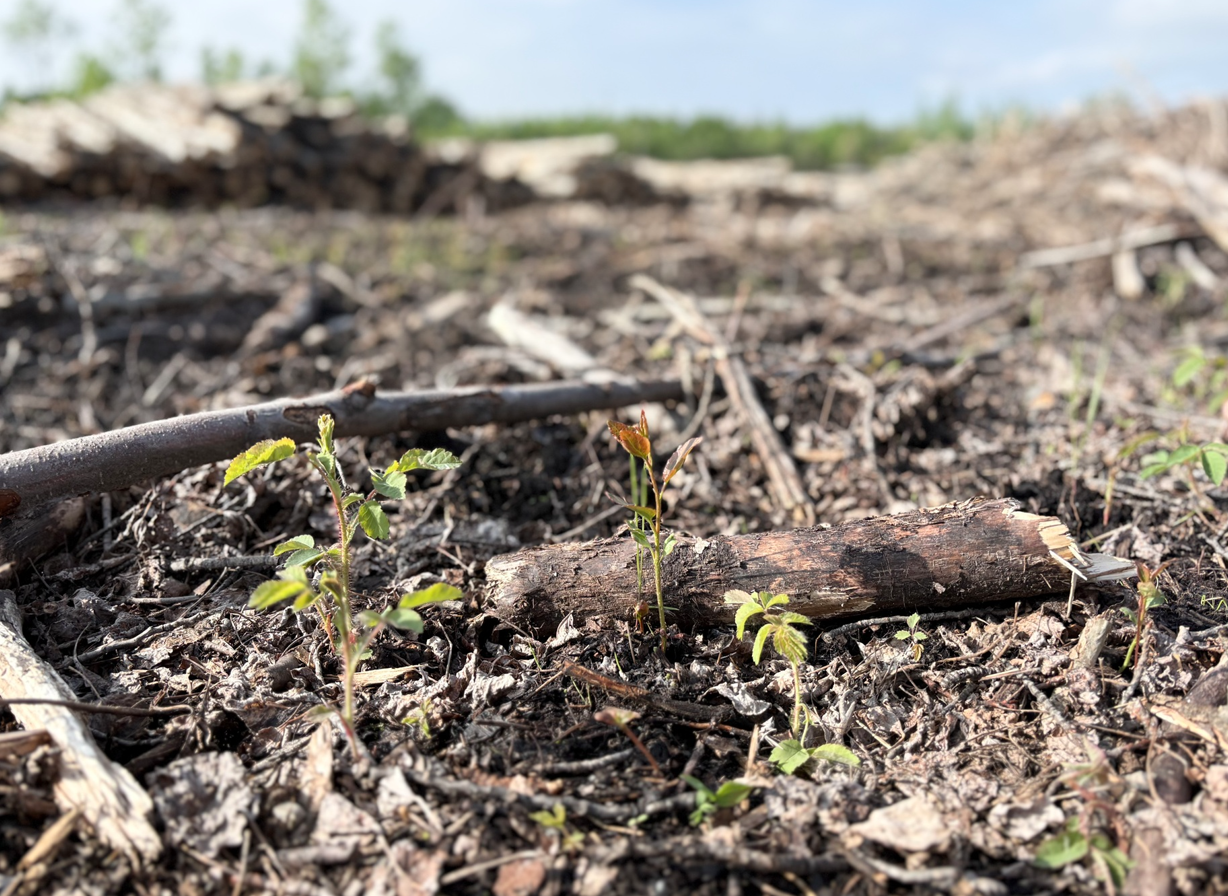
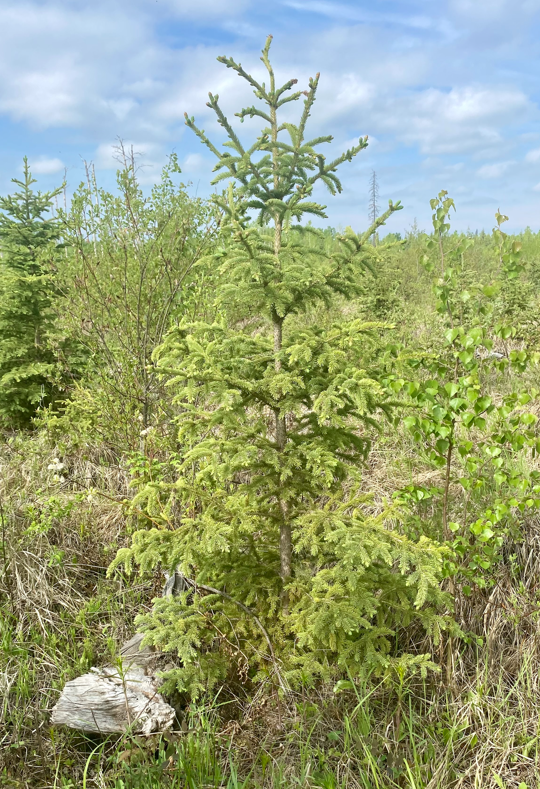
On the ground, the group visited two stands, which are patches of forest managed as a unit. The first was an aspen stand. After aspen is harvested, the stand regrows naturally with new aspen, so no planting is needed. The second was a spruce stand, where the story is different. Mercer explained that after harvest, aspen can dominate the early stages of succession, while the spruce typically becomes dominant later. To help keep spruce in the forest, seedlings are planted. Planting may include improving the site conditions for seedlings (site preparation), and control of competing vegetation. But under climate change, the persistence of spruce may be threatened given its sensitivity.
Mercer’s harvesting also aims to emulate natural disturbances such as wildfire. Rather than cutting every tree, the company modifies the shape and size of harvest areas to reflect natural fire patterns and leaves patches of forest standing, much like the unburned islands that fires leave behind. The stand visits were the highlight of the trip for Zijing: “It was valuable to see specifically how Mercer manages different forest types.”
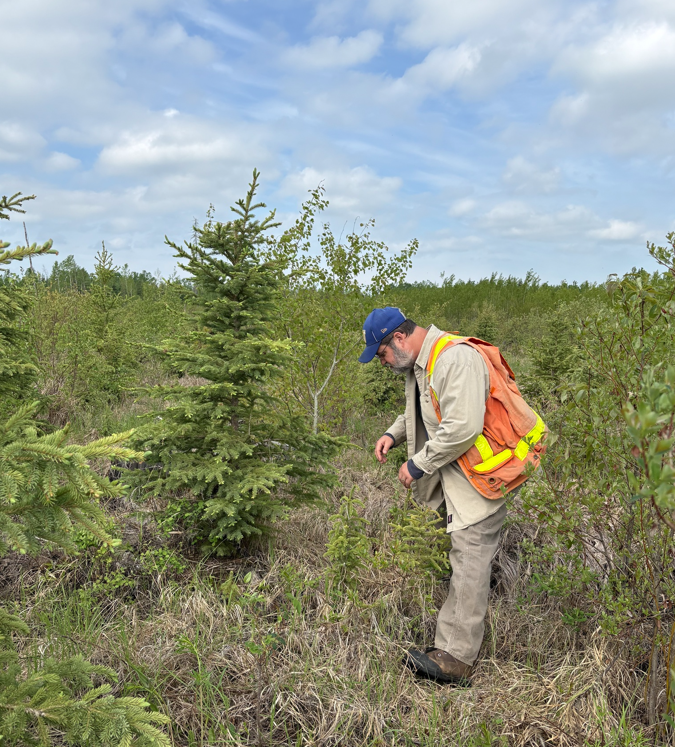
For Shelley, the conversations during the field tour were particularly meaningful: “Our exchanges with local foresters helped me understand the unique ecological nuances of a fully managed forest that may not be detailed in a textbook,” she says. “They also let me recognize the shared goals we have with forestry professionals, which I believe are sometimes overlooked in the scientific community.”
The feeling was mutual. According to Shelley, Mercer welcomed the researchers and was keen both to share its expertise and to hear about the research. “The knowledge and experience on each side filled gaps that the other group wanted to understand better,” she says. Zijing also found the team open and generous with their knowledge. “Talking with Mercer gave me a better sense of the operational considerations behind their management decisions.”
“The visit was a great opportunity to discuss the project and how models are used. Models are great tools but to be useful at the operational level requires modelers and practitioners to communicate.” – Kevin Kemball.
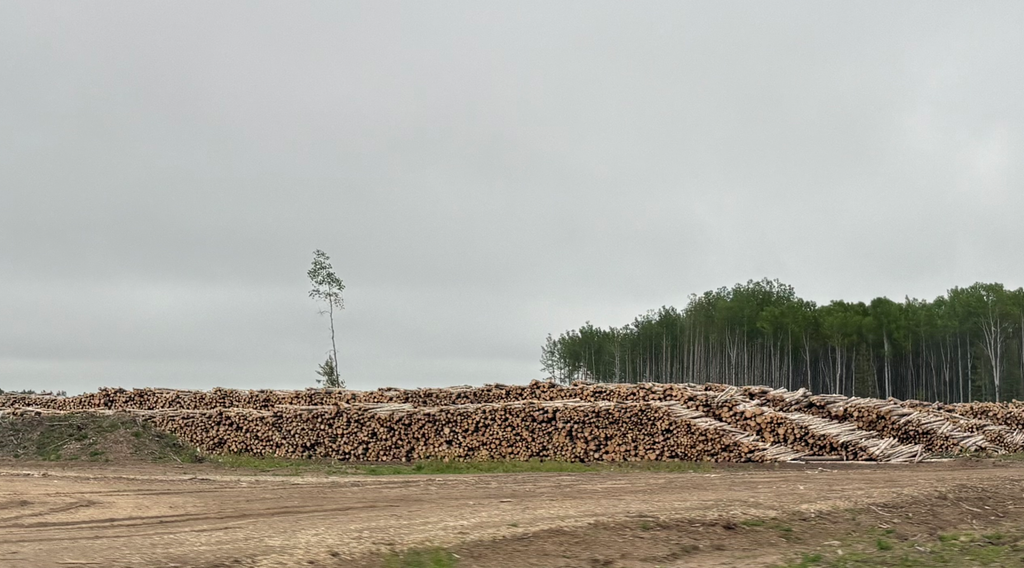
Back at the computer, the visit is already paying off. Shelley says it has been instrumental in recreating the Peace River landscape under the current practices in LANDIS-II. It is also guiding her designs of two alternative approaches that DIVERSE is testing: the Climate Smart Forestry scenario and the Functional Complex Network scenario. “My goal is to produce research results that are directly relevant for stakeholders,” she says, “and this visit allowed me to better situate myself in the socioecological environment I am simulating with.”
The visit is also shaping Zijing’s research on a different landscape. What she saw in the field is informing how she represents planting and harvesting treatments in LANDIS-II. The visit has also sharpened her focus on forest management scenarios for the region. “Seeing how planting and harvesting are carried out in practice helps define these treatments in the model,” she says.
No return trip is planned yet, but both students would welcome one. Shelley is especially keen to see how an assisted migration experiment will be set up in the Peace River East FMA, in which tree seeds from different regions will be planted to test their growth, preparing for a warmer future. It was still in early planning during her visit. “It mirrors what I simulate in LANDIS-II,” she says, “and could eventually provide empirical data to compare with my model outputs.”
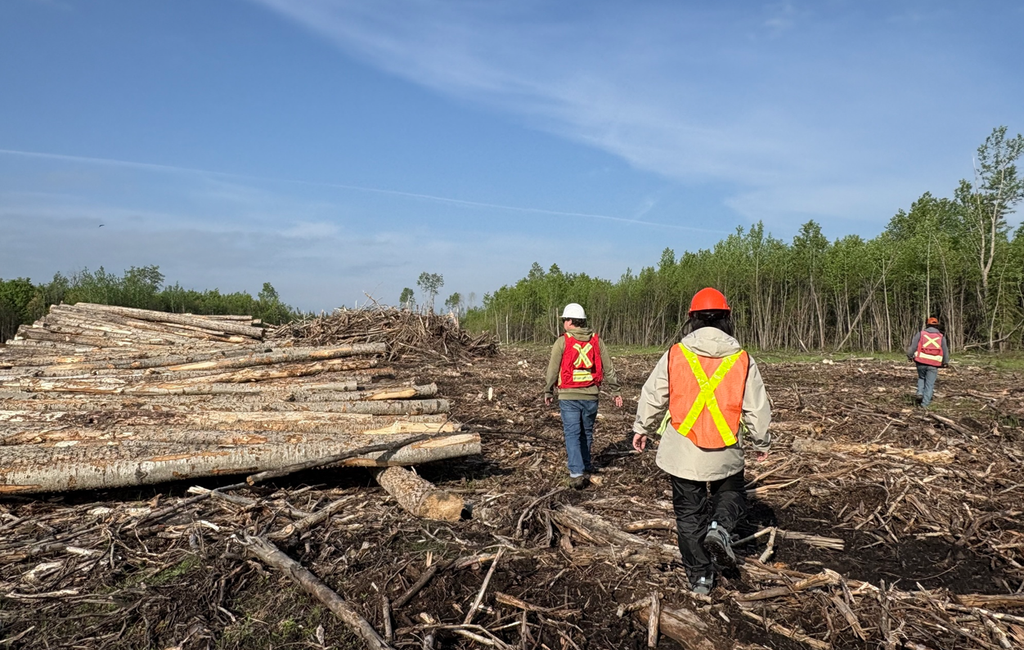
A special thanks to Mercer Peace River Pulp Ltd. for hosting the visit, and to Kevin Kemball, Aaron DesLauriers and Arianna Loogman for their time during the field tour!