
22
Sites across Canada
Driving along the shores of beautiful Lake Superior, the DIVERSE coordinators were struck by the lumbering White Pines that proudly stood taller than the rest of the forest surrounding them. As coordinators from provinces other than Ontario, we found ourselves paying close attention to how the landscape shifted around us – here it wouldn’t be long before we saw just how much that could change. We started our journey in Sault Ste Marie, where multiple DIVERSE HQPs (highly qualified personnel, i.e., graduate students and post-doctoral fellows) and researchers met and embarked on a road trip to visit two of our research sites in Northern Ontario.
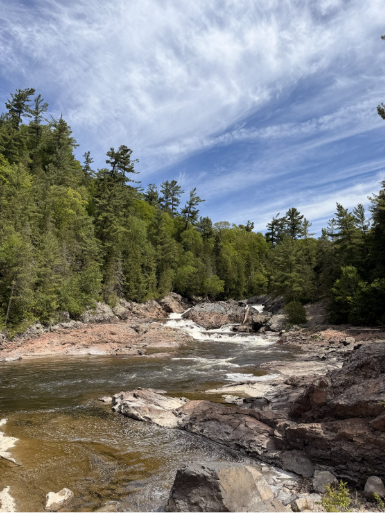
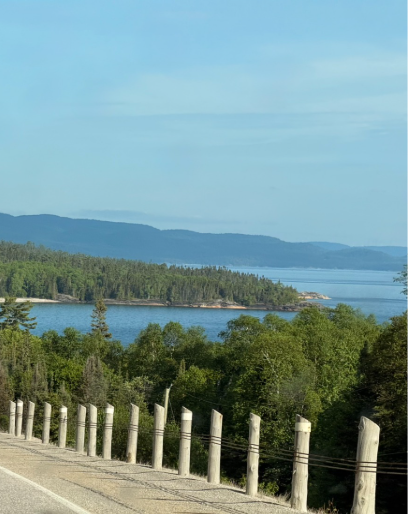
Once we’d made our way around Lake Superior, our journey turned north, and the landscape around us gradually changed from dense forests full of many different tree species, to more homogenous stands of black spruce. Those same white pines that had greeted us at the first leg of our journey were now nowhere to be seen. We remarked how, in just a 4-hour car ride, there were such obvious changes in forest types: an apt reminder of the importance for our research sites to span multiple ecoregions across the country. So much diversity exists even within one province, let alone the entire nation. By the end of the road trip, we reached White River, Ontario, where we would be based for the next two nights (and fun fact: White River is the home of the bear cub that inspired Winnie the Pooh!).
Our first site visit was the White River DIVERSE Silvicultural Trial Installation (learn more about our silviculture trials like here), which was planted only a few weeks after our tour there, and is now DIVERSE’s first planted Silvicultural Trial. Despite intermittent rain, and endless attention from mosquitos and flies, it was extremely valuable simply seeing the actual site. After years of planning and hearing about the site, seeing it at scale up close made the research come alive. For some of our HQPs, it was very important to come along to the forest, as some had not set foot in a forest plantation before. (Want to read more specific details about the White River DIVERSE Installation? Check out our earlier blog post here.)
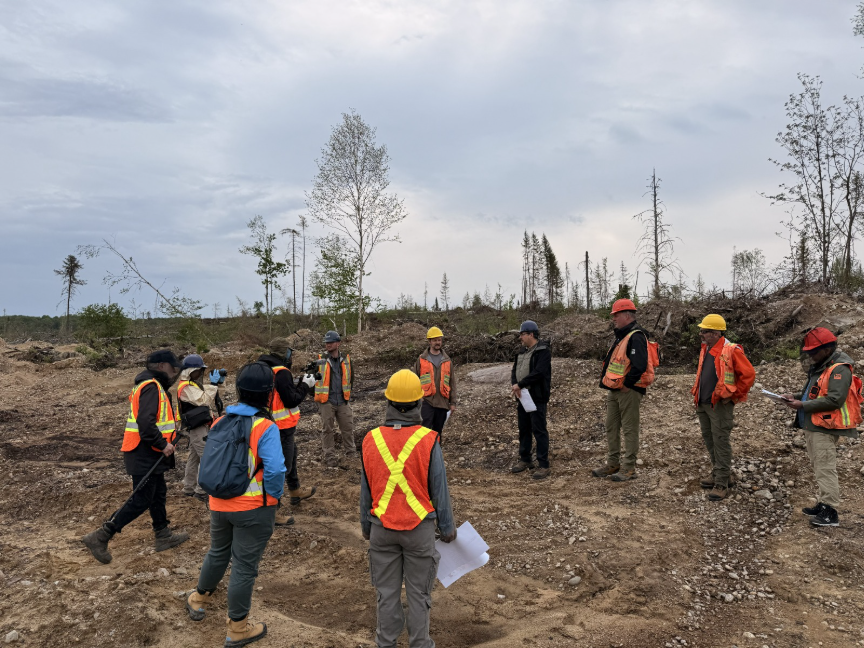
When planning field tours, we often try to ensure we visit non-DIVERSE sites, to learn more about other research and what lessons other projects have learned through their own installation processes. After visiting our White River installation, we made our way to an Open-Top Chamber Experiment – not a DIVERSE site, but an already established trial involving multiple novel species and assisted migration (the deliberate movement of tree species or seed sources to areas better suited to future climate conditions). One of our PhD students, Charlotte Grieve, had been part of installing this site years before! It was a special moment for her to return and see how the trees she’d helped plant had grown since.
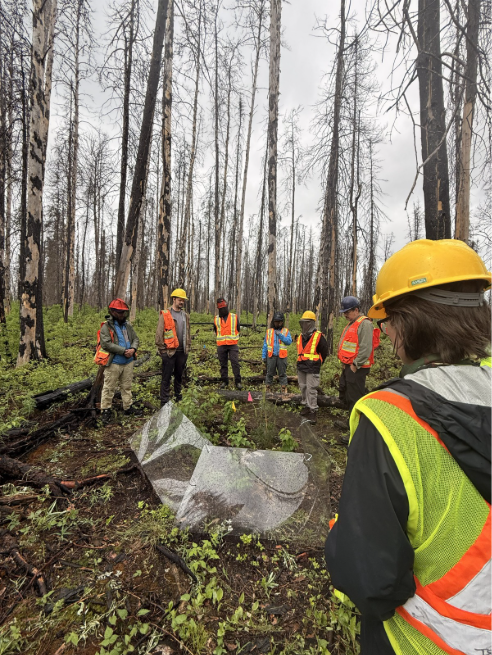
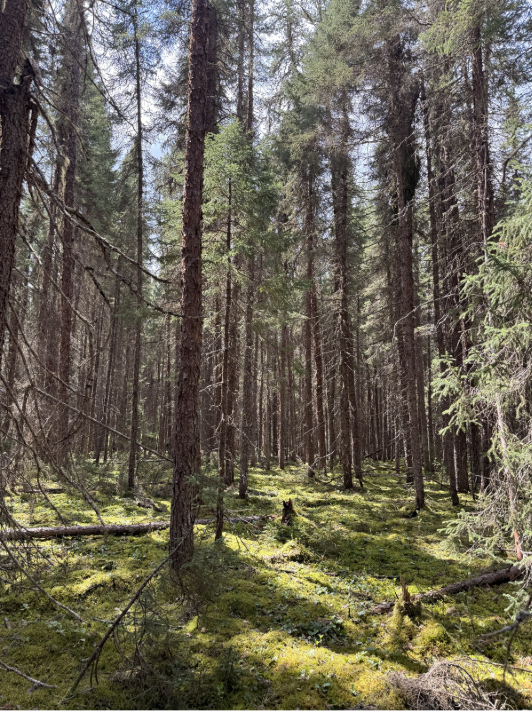
On our second tour day, we drove over an hour to reach another DIVERSE installation at the Pic Forest – watching the landscape shift around us once again as we went. This installation is being harvested this summer, so the stands were still lush and full when we arrived. We were struck by the dense moss that covered the entire forest floor, making walking through it feel like walking on a soft cloud. Would this moss re-establish after the partial and clear-cut harvest treatments were implemented? How would the landscape look even in a year after the installations were set in place?
Overall, our group left the tour feeling energized and excited to see the rest of our silviculture trials installations to unfold. If you’re planning a similar trial yourself, here are some key takeaways from our experience:
In the end, this trip was a small-scale version of what DIVERSE is all about: a reminder that no single site, or even single province, can capture the full range of Canada’s forests – which is exactly why our work has to span all of them. Stay tuned for updates on our other silviculture installations: these first sites we visited are only two out of many more to come across Canada!