
22
Sites à travers le Canada
À la fin mars 2026, les responsables des thèmes de recherche ainsi que l'équipe de gestion du projet DIVERSE se sont réunis à la Faculté de foresterie de l'Université de Colombie-Britannique pour deux journées consacrées à un mot d'une simplicité trompeuse : l'intégration.
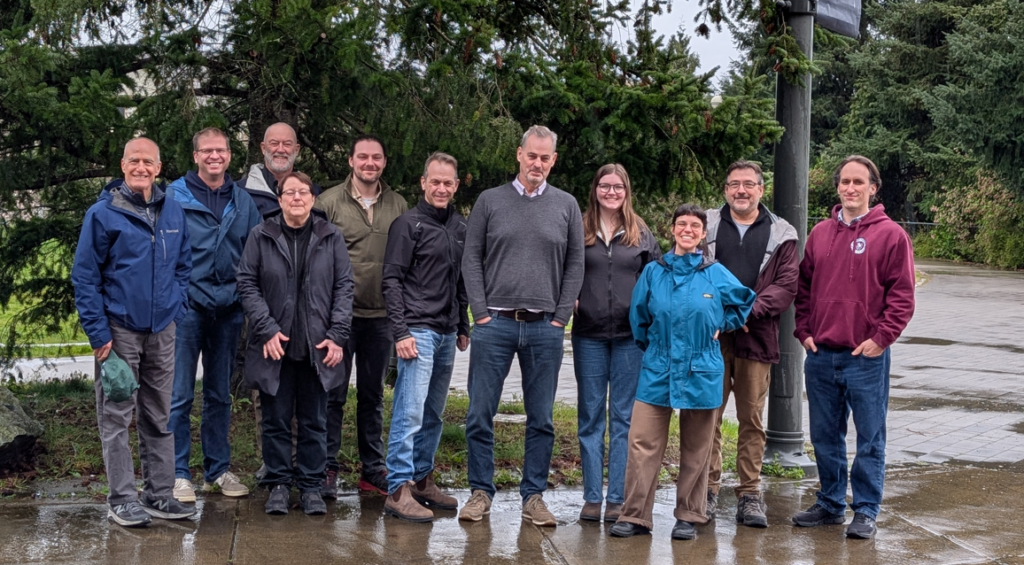
Pour un projet aux multiples facettes comme DIVERSE – un réseau national couvrant six thèmes de recherche, plus de vingt sites et un large éventail de partenaires –, « l’intégration » est à la fois le ciment indispensable et la tâche la plus ardue. Lors de la réunion à Vancouver, l'équipe de recherche s'est penchée sur ce que l’intégration signifiait pour elle et de quelles manières elle était déjà en cours.
Aller au-delà des voies parallèles
« L'intégration n'arrivera pas par accident. »
« L'intégration n'arrievra pas par accident. » Cette réflexion, formulée par Peter Duinker, facilitateur pour l'intégration du projet, a donné le ton dès le début de la rencontre. Le groupe s'est rapidement entendu sur le fait que les objectifs ambitieux de DIVERSE - qui consistent à combiner les connaissances écologiques, sociales, économiques et opérationnelles pour transformer la gestion forestière - exigent une conception délibérée de l'intégration plutôt qu'un vague espoir que les résultats communs s'harmoniseront.
Plusieurs personnes ont souligné que l'intégration devait être délibérée, structurée et intégrée au projet. Cela implique de dépasser le stade des thèmes de recherche parallèles pour s'orienter vers des processus collaboratifs qui relient les données, les résultats et les personnes.
Définir la signification du terme « intégration »
Le premier obstacle à l'intégration est d'ordre conceptuel : que faut-il intégrer exactement ? Le groupe a identifié plusieurs niveaux : au sein des thèmes, entre les thèmes, et à l'extérieur, avec les partenaires et les praticiens.
Au niveau interne, plusieurs thèmes relient déjà les sous-projets, les méthodes et les ensembles de données de DIVERSE. Par exemple, les travaux du thème 1, qui associent les évaluations de vulnérabilité aux priorités des partenaires, témoignent d’une intégration profonde, de la conception jusqu’au développement. L'intégration entre les thèmes reste toutefois inégale, l'échéancier et la disponibilité des données étant parfois décalés. L'intégration externe - qui consiste à relier directement la recherche aux pratiques de gestion - constituera également une étape cruciale pour garantir que les données scientifiques de DIVERSE contribuent véritablement aux décisions forestières.
Chaque niveau d'intégration nécessite des mesures différentes : la mise en place d'outils communs, l'harmonisation des objectifs, la synchronisation des résultats et des canaux de communication efficaces. La marche à suivre pour y parvenir n'est pas encore tout à fait claire.
Vers des sites entièrement intégrés
Une idée concrète qui a gagné de l'intérêt au cours de ces deux jours était celle de la mise en place de « sites de démonstration entièrement intégrés »
Une idée concrète qui a gagané de l'intérêt au cours de ces deux jours est celle de la création de « sites de démonstration entièrement intégrés ». Il s'agirait de sites de recherche DIVERSE spécifiques où les six thèmes convergent, de la modélisation écologique à l'évaluation socio-économique, afin de tester l'intégration dans la pratique. Ces sites pourraient accueillir des ateliers et des visites terrain qui contribueraient à faire le lien entre la recherche, la gestion et les politiques, tout en servant de laboratoire vivant pour DIVERSE et pour la suite. La sélection d'un ou deux sites de ce type permettrait à l'équipe de créer un microcosme du projet dans son ensemble.
Construire une équipe d'intégration
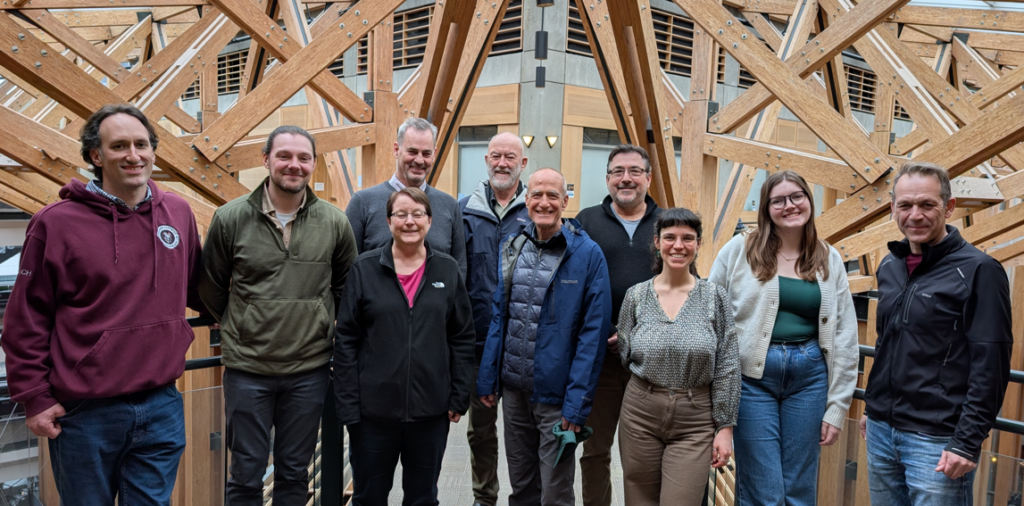
Les discussions menées lors de la réunion revenaient sans cesse sur la question des personnes : qui, exactement, est chargé de faire avancer l'intégration ? Si le rôle de facilitateur joué par Duinker a été très bien accueilli, le groupe de recherche a reconnu la nécessité de mettre en place une équipe d'intégration comprenant des rôles de coordination et de recherche chargés explicitement de relier les différents volets entre eux.
Les coordinatrices ont été désignées comme des facilitatrices essentielles, chargées de faire le lien entre les aspects scientifiques et administratifs, d'assurer la circulation de l'information et de contribuer à l'organisation des réunions d'intégration au cours des prochains mois.
Il sera essentiel, tout au long de ce processus, d'embrasser l'ambiguïté : on ne peut pas tout savoir dès le départ, et les progrès se feront au fil des apprentissages et adaptations. L'équipe a convenu que la mise en place de petits groupes de travail, chargés d'élaborer une vision commune et d'identifier les liens entre les différents thèmes, serait indispensable pour les prochaines étapes.
Apprendre des autres : les enseignements tirés du réseau ASCC
La collaboration avec des réseaux tels que le programme « Adaptive Silviculture for Climate Change » (ASCC) a également été bénéfique. Au cours de la réunion, l'équipe de recherche a eu l’occasion d’échanger avec Courtney Peterson, gestionnaire de projet au sein du réseau ASCC. Son expérience dans la mise en place d’installations de sylviculture adaptative a permis de réfléchir à comment la science et la gestion co-produisent des résultats. Établir des liens entre les réseaux ASCC et DIVERSE pourrait leur bénéficier mutuellement.
Tisser des liens : un guide opérationnel
Dans le cadre de nos efforts visant à renforcer l'intégration externe, nous avons élaboré une stratégie pour le développement d'un outil mettant les résultats et les méthodes utilisés dans le cadre du projet DIVERSE directement à la disposition des professionnels forestiers : un guide opérationnel. Ce guide opérationnel pourrait être conçu comme un guide destiné aux professionnels, synthétisant l'expertise des différents thèmes abordés par DIVERSE en un outil pratique et modulaire à l'usage des décideurs, qu'il s'agisse de forêts communautaires ou d'unités de gestion forestière industrielle.
Comme l’ont souligné plusieurs chercheurs, le défi ne réside pas nécessairement dans un manque de connaissances, mais dans l’accessibilité : les outils, les cadres et les modèles existent déjà en abondance ; ce qui manque, c’est une synthèse permettant aux utilisateurs de s’y retrouver facilement. En ce sens, un guide pratique pourrait devenir l’un des outils d’intégration les plus pertinents de DIVERSE : un document évolutif qui incarne les connaissances collectives du réseau.
Une détermination partagée
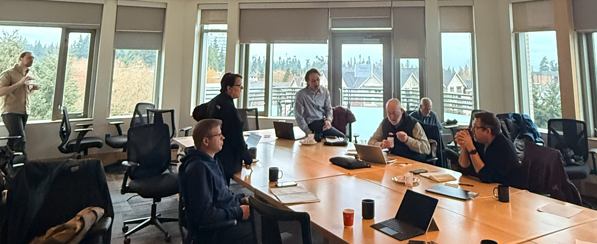
L'équipe de DIVERSE reconnait les risques : manque de coordination, engagement inégal et divergence des objectifs de recherche. Mais elle fait également preuve d'une volonté commune de combler ces lacunes. L'intégration ne sera pas une étape unique, mais plutôt un processus en constante évolution.
À l'issue de la réunion, le groupe est reparti avec des mesures concrètes : définir l'intégration, constituer l'équipe chargée de l'intégration, sélectionner des sites pleinement intégrés et planifier des suivis réguliers. Mais surtout, l'équipe est repartie avec une motivation renouvelée, ayant pris conscience que la force de DIVERSE réside non seulement dans la diversité de ses recherches, mais aussi dans la manière dont ces différents éléments s'articulent pour façonner l'avenir des forêts canadiennes.
Le travail d'intégration a commencé.